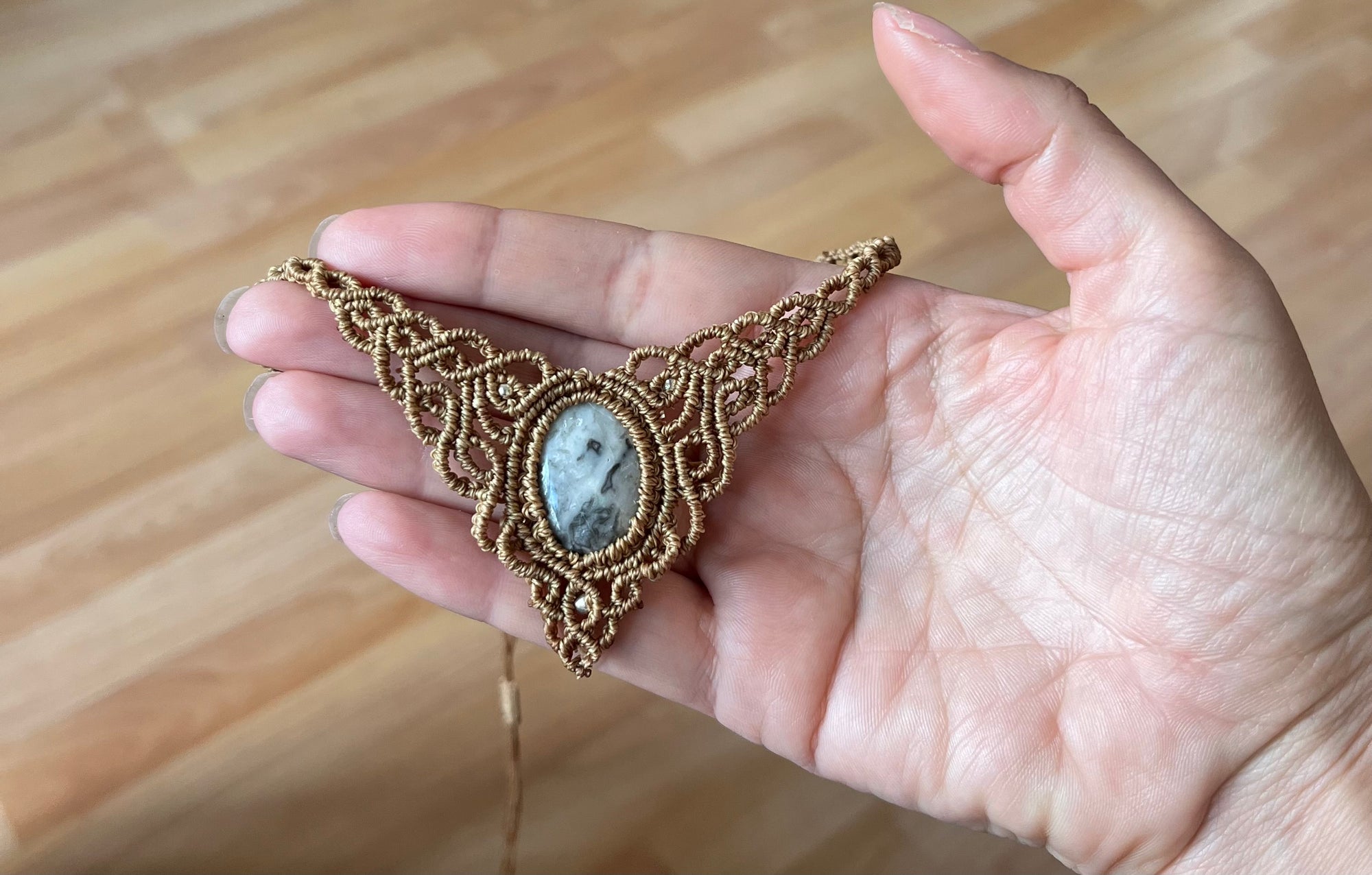
Macramé, or Knotting
Although this style is often associated with the 70s and the hippie style, its history is much older. The knotting technique first appeared probably in ancient Babylon and Egypt, where knots were used in making decorative edges of clothing or drapes. Textile craftsmen used knotting for aesthetic ornamentation of fabrics and to ensure the strength of edges.
Arabian Influence and Global Expansion
The word "macramé" comes from the Arabic migramah, meaning "ornamental fringe" or "tassels". Arab weavers used this technique to create beautiful patterns on clothing and household textiles. Through trade routes, macramé spread to Europe, especially to Spain and Italy, where it became popular among the wealthy as a luxurious decorative craft.

Macramé in the 19th and 20th Centuries
In the 19th century, macramé became a popular pastime among British sailors, who used it to make ornamental ropes and nets. From them, the technique spread to homes across Europe, and the first decorative items began to emerge - tablecloths, curtains, and even pocket organizers.

In the 20th century, particularly in the 1970s, macramé experienced its second "golden age". Hippie culture discovered it as a symbol of a free, creative lifestyle. Hanging planters, wall decorations, and knotted accessories became an icon of that era.
Why has Macramé lasted for centuries?
Macramé is not just aesthetic - it is also a relaxing and meditative activity. Each knot requires patience and precision, bringing a sense of calm and satisfaction. The combination of simple techniques and endless pattern possibilities makes it a universal art that attracts artisans and designers worldwide.

And how is macramé used today?
Macramé is no longer just about hanging planters. Today, you'll find it in many forms:
- wall decorations and tapestries
- plant hangers
- handbags and fashion accessories
- jewelry (bracelets, necklaces)
- decorations for weddings and celebrations
- home accessories like pillows or curtains
Thanks to its versatility, everyone can find something for themselves - from simple projects to more complex design pieces.