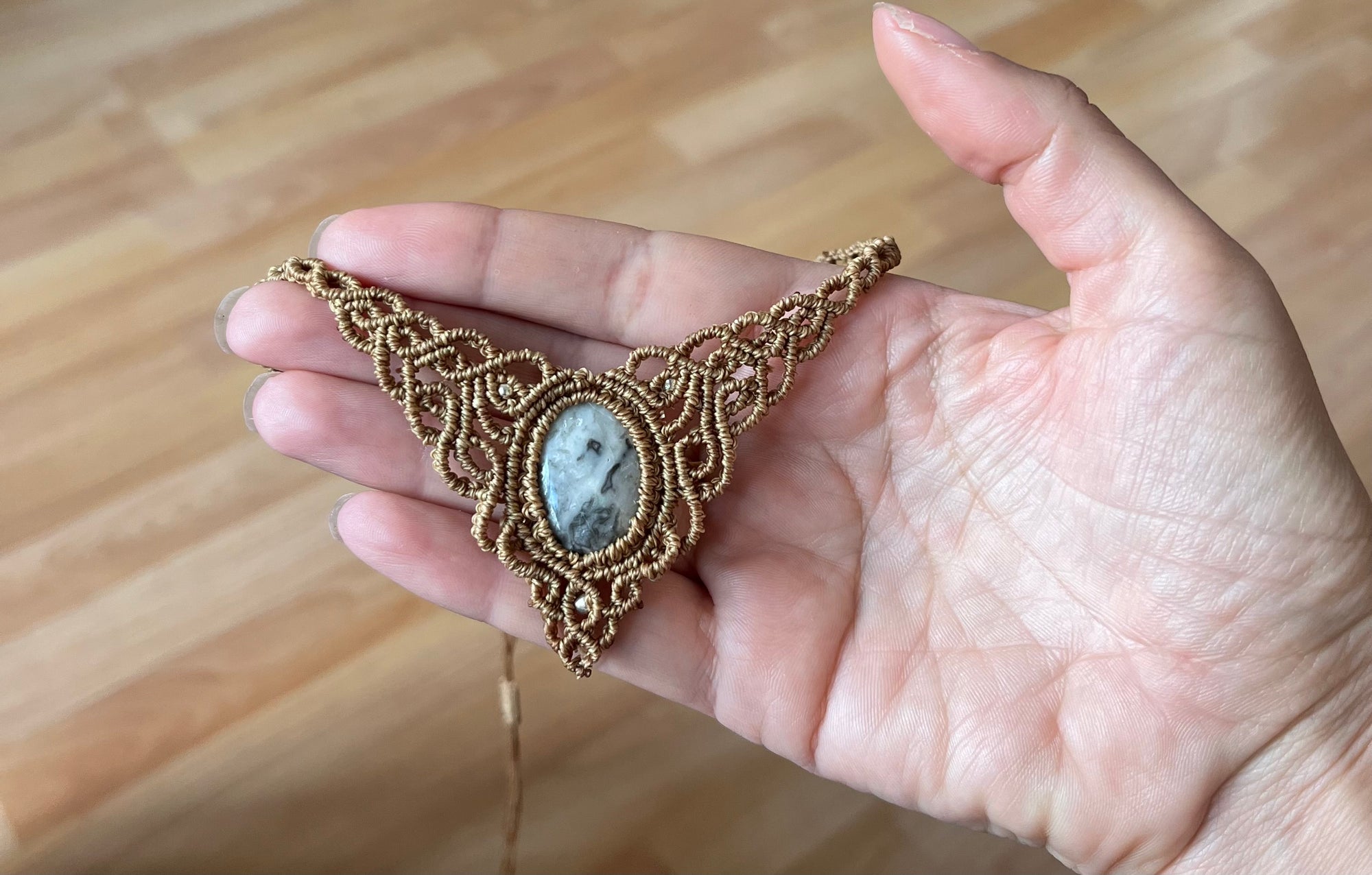
If you've encountered the word and technique Macramé for the first time, you might be a bit confused. That's why you should read my blog. 😆
I write various things about the Macramé world here, and this time we'll look at the difference between micromacramé and Macramé. Honestly, I've fallen in love with both terms. 🫶
You might be wondering why there's a long "é" at the end of the name. This word comes from the French word macramé, which is why the long "é" is retained in Czech. In English, it's colloquially shortened.
You might also be wondering why micromacramé and Macramé exist, but not "macromacramé." 😆 This term doesn't exist in the Macramé world. In practice, it never caught on. You won't find this term in the Macramé community.
In this article, we'll look at the main differences between micromacramé and macramé – from the materials used to the difficulty and the final look. Whether you're a complete beginner or looking for a new creative direction, I'll help you figure out which of these techniques is right for you.
- Size and Details
-
Micromacramé:
- Very fine and detailed knots.
- Here, thin waxed, polyester (synthetic) yarn dominates. Natural materials (cotton, linen, or satin cord) are not widely used due to lower durability, fraying, and difficulty in holding knots together. Typically, sizes (0.5–1 mm) are used.
-
Suitable for jewelry (bracelets, necklaces, pendants), delicate decorations.
-
Macramé:
- Coarser, larger knots and patterns.
- Thicker cord (2–5 mm or more) is used.
- Both synthetic and natural materials are often used here. There are brushable and unbrushable yarns, depending on the effect you want to achieve.
- Twisted, braided, single-strand cords are used.
-
Suitable for larger decorations: handbags, clothing, and home accessories (hanging planters, curtains, wall decorations, large tapestries).
2. Material - I will write an article about the right material, everything doesn't fit here
- Micromacramé: thin waxed threads, polyester cords….

-
Macramé: thicker rope - made of cotton, wool, linen, jute ropes, hemp, bamboo - all these are ropes made of natural fibers, or nylon (you can see in the picture).

3. Use and Style
- Micromacramé: precise and detailed work, jewelry with delicate knots and beads, decorative trinkets.
- Macramé: interior decorations, hanging nets, chairs, swings, rugs, handbags and belts, clothing, and larger geometric patterns.
4. Knotting Technique
- Micromacramé: requires great precision, small needles or pins are often used for fixation.
- Macramé: knots are larger and less demanding in terms of precision, often worked freely with hands on a hanging rod. Mostly standing.
Summary:
- Micromacramé = delicate, detailed, jewelry, small decorations.
- Macramé = coarser, larger, home decorations, tapestries…